
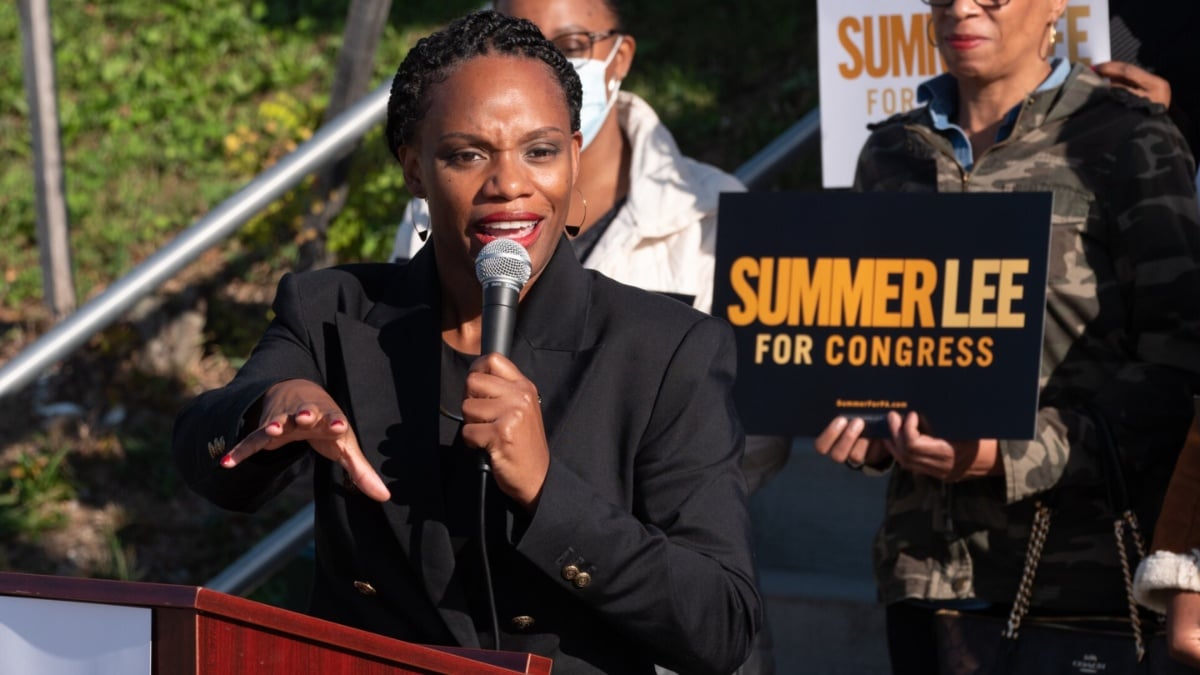
U.S. Rep. Summer Lee of Pennsylvania posted on X that modern healthcare was built on the exploitation of Black bodies, citing nonconsensual experiments on enslaved women and the case of Henrietta Lacks. She linked the history to current Republican criticism of diversity, equity, and inclusion efforts. The post, which includes a video, has drawn strong reactions in the comments section.
The post was shared on X by U.S. Rep. Summer Lee, who represents Pennsylvania’s 12th Congressional District. In the video, Rep. Summer Lee states that colleagues know some procedures were “performed on enslaved” individuals. She adds that “MCAT scores don’t translate to matches to residency” and that other factors “do matter in the medical” field, while noting the need “to afford them elite private” options and the reality that people “work multiple jobs.”
The accompanying post text states that “Modern healthcare was built on the exploitation of Black bodies, from nonconsensual experiments on enslaved women to the theft of Henrietta Lacks’ cells.” It continues that Republicans now call efforts to address inequities “DEI” instead of confronting those issues. This framing has not been independently verified beyond the post itself.
Backlash and Debate Follow the Hearing Clip
Some commenters described the remarks as divisive or unhelpful. One wrote, “Keep up the racist rhetoric. That’s all you crazy dems have.”
Another stated, “Your pathetic racial rhetoric is a constant slap to the African American community. Grow up.”
Other responses questioned the emphasis on historical grievances or current claims. A user remarked, “You are equal now, but that is not what you desire.” Another called the content “*expletive* DemoRat Lies.”
Additional comments pointed to broader history or legal equality. One noted that “many groups, including the Irish, Jews, and others, had faced exploitation and hardship.”
A commenter asked, “Did you miss the civil rights movement where everyone was given the same rights, you gaslighting racist?”
For now, the post continues to fuel discussion on X about the intersection of medical history and current equity policies. Commenters remain divided over whether the remarks advance meaningful dialogue or reflect partisan framing.