You’ve read them; I’ve read them; we’ve all read the varying reviews plastered all over the place for Mixtape, the nostalgia-fueled coming-of-age story from developer Beethoven and Dinosaur. Now that I’ve had the chance to play the game through myself and compare it to everything I’ve read online, I’m here to give my take.
Tonally, I think that Mixtape did everything that it set out to do. Even if you didn’t share the same life experiences as these characters, there was still a sense of longing and nostalgia in the narrative and investigative gameplay. However, it definitely missed a couple of marks in that process.
I Just Wanna Go Back, Back to 1999
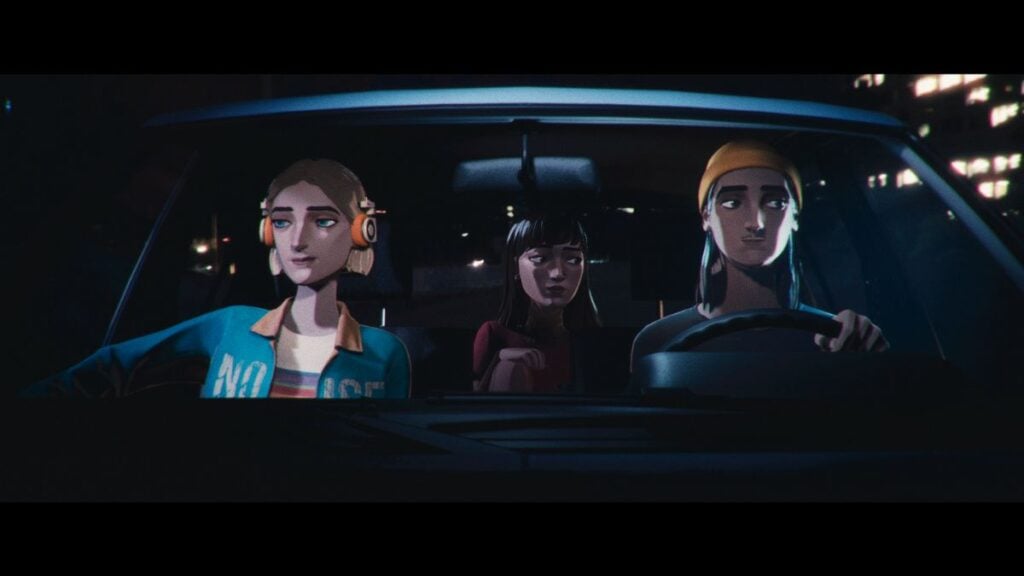
The story revolves around three teenagers in the 90s, on their very last night together after graduating high school. The primary teenager telling the story, Rockford, is set on composing the soundtrack to their night, which includes some pretty killer songs that essentially set the tone for each chapter.
I applaud the way that the story is told, parsing through memories of their friendship to explain their dynamic and playable little vignettes and moments, but I can’t help but feel it’s told from a rather narrow perspective. Don’t get me wrong, I got the message that was being told, but I also know that I did because I’ve watched enough John Hughes movies to know what it is that I’m supposed to be feeling.
Sure, I understood the sly smiles during particular story beats, and the thought process behind a lot of what the teens decided to do; I was a teenager at some point, too. However, I couldn’t help but feel that I’d already seen this tale before. It’s visually stimulating, and it does invoke emotion, but the beats of its story are by the numbers.
That being said, I can see it being a perfect representation of what it is like to be a misunderstood teenager who is about to be thrown into the world with no real plan or idea of how you are going to be moving. Music and hanging out with friends you will likely never see again seem to be among the only things that are a universal experience in every teenager’s life, and that alone helped carry me along.
Rhythm and Rebellion
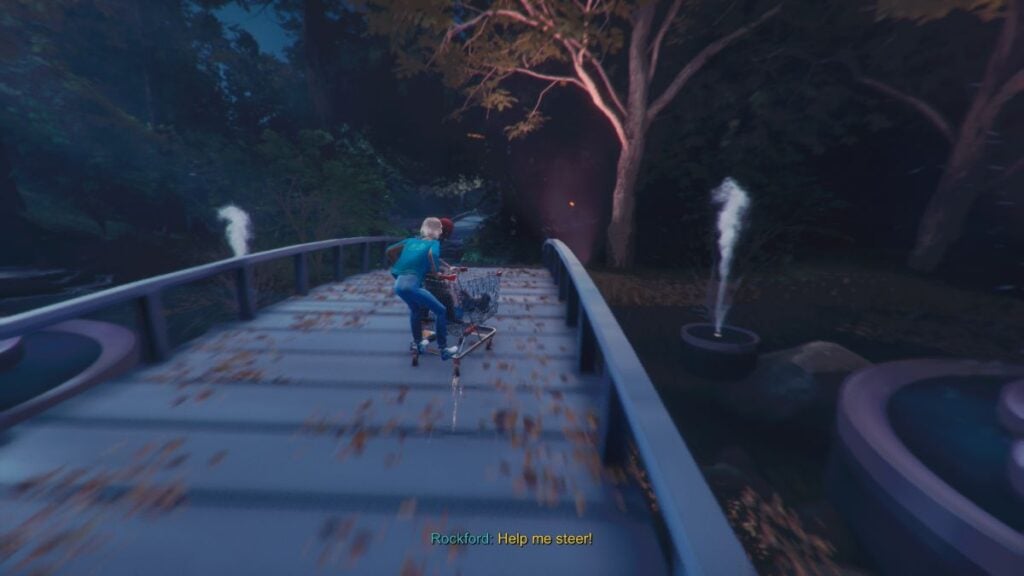
I thought the gameplay was one of Mixtape’s stronger points. Despite a lot of people clowning on it because there are varying points that really don’t even require you to touch any buttons, it definitely had its moments. Every chapter is almost divided into gameplay types that absolutely fit the aesthetic of what’s going on in the moment.
Since there is a different song per chapter, there is also a bit of a different vibe, and that reflects in what it is you’re actually doing. The song list starts off with Devo’s That’s Good and somehow, it pairs perfectly with the relaxing feeling of skating downhill with your best friends after your last day of school, performing tricks, and doing your best not to get hit by any cars.
I also thought it was interesting that the devs took creative liberties in some areas when it came to the gameplay. If you don’t already know about the absolutely disgusting kissing scene, then allow me to ruin your day: you control a different tongue with each of your thumbsticks and are asked to basically move them around one another as though you’re making them french kiss. It’s weird and clumsy, but so was my first kiss!
There are a lot of similar bits scattered throughout the game, too. These often take the music to new levels, elevating scenes with clever timing in ways that pulled me in and kept me immersed. I’d find myself soaring through levels because they were just so interesting to behold and fun to play out.
Stop Motion and Emotional Damage
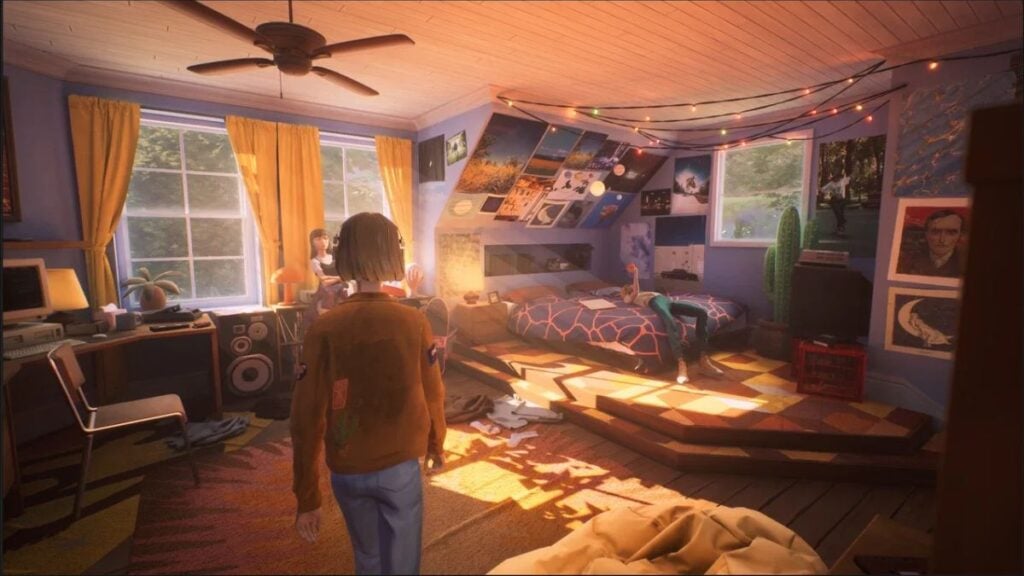
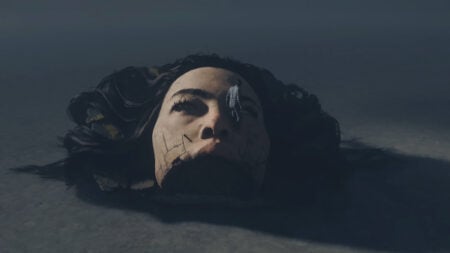
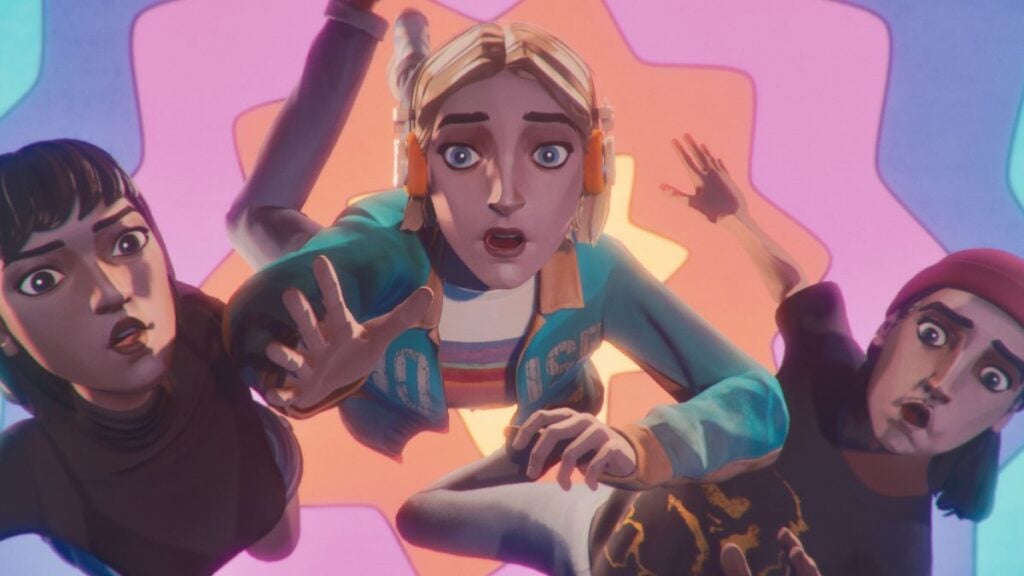
The graphics and overall aesthetics were another of Mixtape’s stronger suits, especially since it was so similar to another one of my favorite games of all time: South of Midnight. It features a stop-motion animation that just feels as though the characters came directly out of someone’s sketchbook.
It’s not something that I regularly see in video games, and not even so much in animation. As someone who truly enjoys seeing something that looks new or strange in the world of artistic direction, I truly think that this story would not have been as effective in a different style. I don’t think it would have felt the same or stimulated an emotional response as sharply.
I also applaud the direction taken for the characters themselves and the overall environmental design. Every area that you walk through feels very deliberate, as though a lot of time and effort was put into ensuring that the song chosen and items laid around perfectly encapsulate the moment being played.
At the very beginning, there is a point where you are inside of Rockford’s room, able to rummage through her things so that you can begin getting an idea of who each of these characters is. Whenever you’d pick up something of importance, you’d be taken back to that item’s prime importance and why it’s something she decided to keep in her room
Now THAT’S a Mixtape
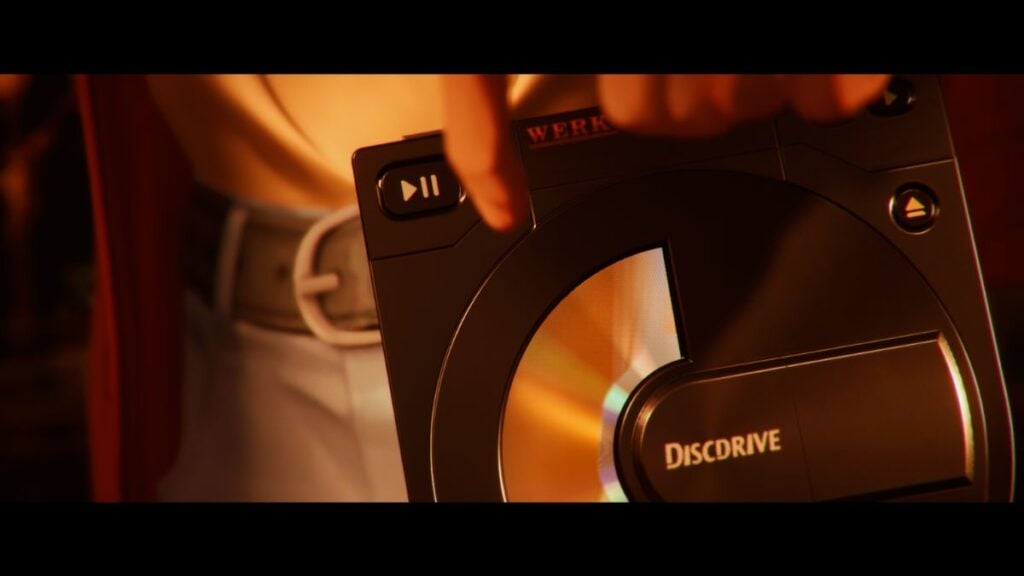
Okay, let’s talk about the music. I was definitely a teenager whose headphones were glued to their ears, listening to my favorite bands and doing everything in my power not to have them taken away by school administration. So, in just about every way, I completely understood what the devs were thinking with every decision they made in that vertical.
I also think that it was an incredibly strong move to put in lesser-known songs by big bands, and what almost feel like completely random choices by groups that surely can’t actually exist. I was an angsty teenager who didn’t like listening to the same music everyone else was listening to, either, even if it was the very same band.
I completely understand what Rockford might have been thinking when piecing it all together. How is everyone supposed to know how well-educated and knowledgeable I am about music if I listen to the same thing as everyone else? There are even comments about the music choices made by other characters that help guide this implication along. Sometimes, teenagers like the idea of choosing songs that aren’t everyone’s favorites because it still means something to them.
So, the result is a carefully chosen soundtrack that is both brilliant and ironic at times. Spoiler alert: the weird kissing scene has Galaxy in Turiya by Alice Coltrane going on in the background, and I’ll be damned if that wasn’t chosen to represent just how disgusting that moment truly was with something equally as beautiful.
Worth the Ride, Even If You’ve Been Here Before
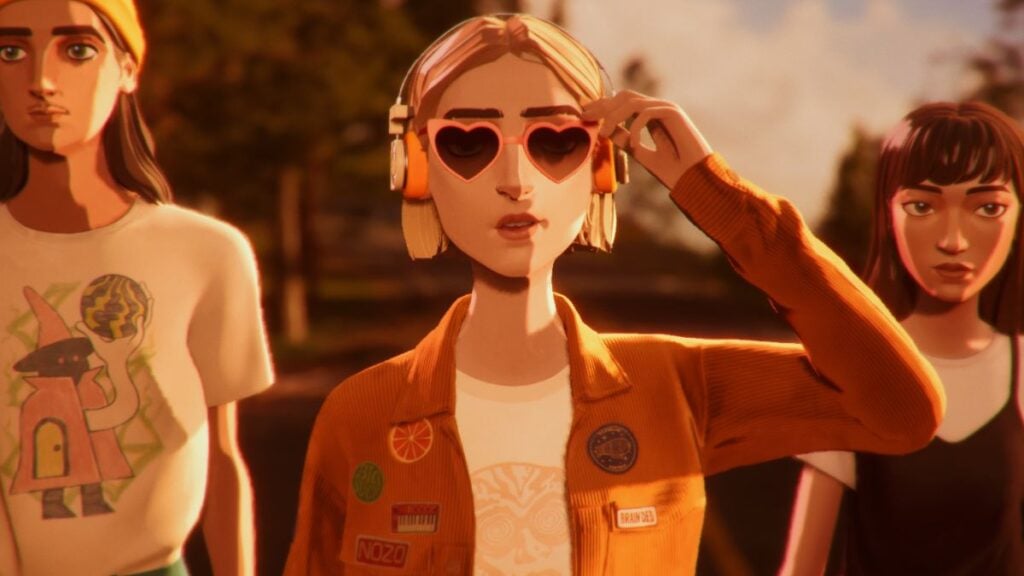
The choice in music for Mixtape and the artistic direction were absolutely stand-out, and I have zero notes on them. However, I recognize that they’re what carry the story as a whole. I think I personally wanted for the characters themselves to be a little more important or for the perspective to be from an angle we haven’t seen before, but it’s obvious that the music, aesthetic, and general message that was being delivered were of the highest focus during development.
I’d be lying if I said I didn’t have a good time throughout Mixtape. As I said before, it definitely does what it sets out to do, but in a world where video games need to be so different to stand out, I can’t really say that this one did anything different beyond its visuals. It was definitely different stylistically, but it was still about teenage friends on an adventure fueled by some sort of connection between them. It’s a video game version of Ferris Bueller’s Day Off, The Breakfast Club, or Sixteen Candles.
Putting the social media war concerning the development team aside, if nostalgic, coming-of-age narratives with a soundtrack you can enjoy in your car are up your alley, then you’ll absolutely love Mixtape. If you’re a little worn out by the concept and are hoping for a fresh spin on 90s friendships, then you might want to take a pass. That being said, it’s still a fun ride for a quick weekend getaway.
Mixtape PC Reviewed)
Mixtape delivers a nostalgic coming-of-age story backed by a standout soundtrack, creative gameplay moments, and striking stop-motion-inspired visuals. While the game successfully captures the emotions of teenage friendship and uncertainty, the review notes that its story feels overly familiar and rooted in a narrow perspective. Despite some awkward gameplay sequences and a narrative that doesn’t always break new ground, the music, artistic direction, and atmosphere make it an enjoyable and memorable experience overall.
The Good
- Incredible soundtrack choices that perfectly enhance each chapter.
- Unique stop-motion-inspired art style.
- Creative gameplay variety that changes with the tone and music of each scene.
The Bad
- Story feels overly familiar and doesn’t do much new with the coming-of-age formula.
- Narrative perspective felt a little limited and narrowly focused.
-
Great!