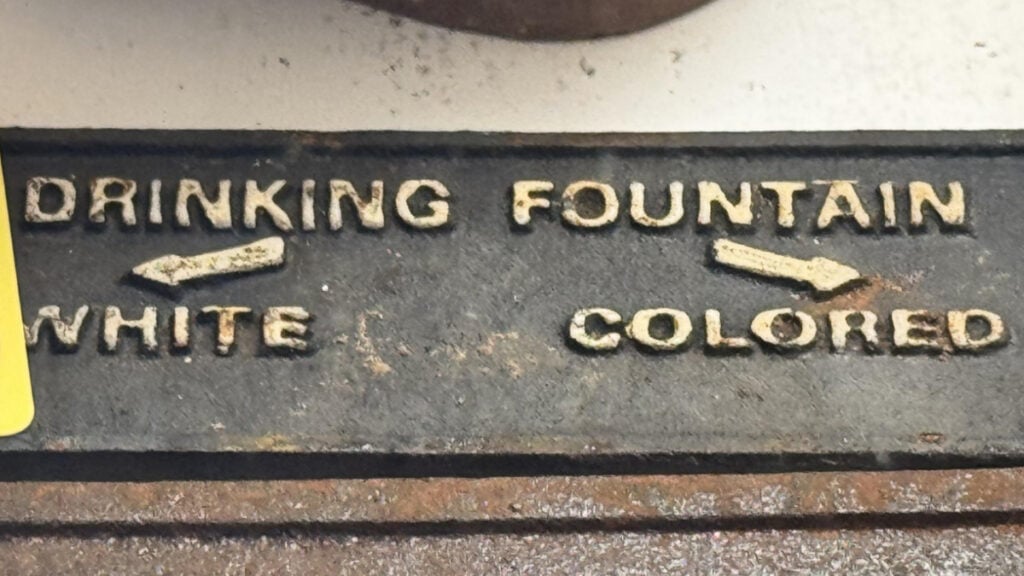
Among the many oddities one might find at an antique shop, one Arizona store had quite the offer going: signs from the Segregation Era. Reddit user Gindotto spotted them and shared a photo on r/pics, remarking how “antique shops are built different in the South.” In the picture, one sign was for a drinking fountain, with two arrows pointing in opposite directions for colored and white people. One was simply a sign for a waiting room with colored people only.
According to Gindotto, the Alabama antique dealer wasn’t a collector but was the owner of the segregation signs and allegedly had kept them up well after 1964. “He seemed genuinely embarrassed telling me why he kept them up so long,” OP remarked, adding how the dealer said that “these were up as late as 1980. Though Gindotto remarked how it’s rather suspicious why the owner didn’t take them down sooner.
Many people felt $115 for the drinking fountain sign was quite outrageous, with others accusing the dealer of selling a reproduction at such a price. Gindotto was quick to correct them, saying that “there’s a picture of the building with these signs up on it.” He continued, “This isn’t a big city catering to MAGA tourists. I was in a small town talking with people who owned this stuff and were witness to it.”
One person in the comments, who claimed to be Black, responded to the post, asking what was wrong with the signs. “As a black guy, I would totally buy one of those signs,” he wrote confidently. “We actually buy these kinda things the most. It’s important to remember.”
Commenters Recall Segregation Was Still Commonplace During Their Childhood
Other commenters shared how they remember that plenty of things were still segregated during their childhood. One Redditor recalled how a train station they were at in the 1990s still had segregated waiting rooms and whatnot. Even Gindotto was in disbelief: “To think of the world I lived in and then to think at that same time you’re riding a train, and the original segregated waiting rooms are still there is a mind bender.”
Many might find it hard to believe that segregation wasn’t too long ago, with plenty of locations and groups of people still setting up barriers against those with a different skin tone in the modern age.