
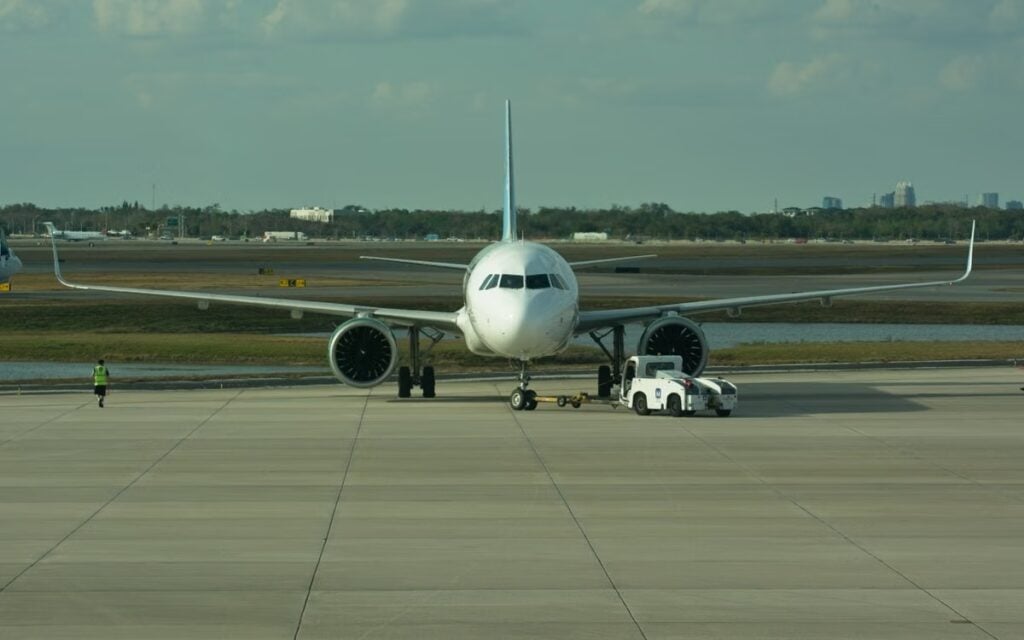
Federal investigators have revealed new details about the Amazon cargo plane that overran a runway at Miami International Airport in Florida, killing five people on the ground. While online speculation initially focused on everything from the airport’s lack of a runway arresting system to possible pilot error, newly released cockpit and flight data are providing a much clearer picture of the final moments before the crash.
The National Transportation Safety Board has now released preliminary information from the plane’s cockpit voice and flight data recorders. According to investigators, one pilot repeatedly warned that the Boeing 767 was coming in too fast during the final portion of the landing.
The aircraft touched down well down the runway, and investigators say the crew initiated a go-around shortly before the crash. However, the throttles were reduced again seconds later as the aircraft continued toward the end of the runway.
Investigators also found no recorded indication that the plane’s speed brakes or thrust reversers were deployed to help slow it down. The aircraft ultimately traveled roughly 1,300 feet beyond the runway, striking two vehicles before stopping.
Miami International Airport does not have an Engineered Materials Arresting System, or EMAS, at the end of the runway. The system uses crushable material to help stop aircraft that overrun a runway, and investigators are examining whether its absence played any role in the outcome. However, the NTSB has not determined the probable cause of the crash.
The five people killed were not aboard the cargo plane. They were members of an aircraft-cleaning crew traveling in a van that was struck after the Boeing 767 left the runway. Both pilots survived, while several other people were injured.
‘They Should Have Just Done the Go-Around’: Viewers Question Landing
The new details haven’t stopped viewers from debating whether the crew should have abandoned the landing sooner.
“Yeah, to put it in context, we have had 767-400 land at LGA with ease. This was a botched landing; they should have just done the go-around,” one Reddit user wrote.
Another added, “I love to criticize Miami’s institutions as much as the next guy, but I’ve seen the video. We all know that pilot messed up.”
Those remain opinions rather than conclusions from investigators. The NTSB is examining the pilots’ actions, along with weather, aircraft performance, airport conditions, and other factors, before determining a probable cause.
For now, the newly released flight data raise serious questions about the final approach without answering the biggest one: what ultimately caused the crash. The NTSB investigation remains ongoing, and investigators have cautioned that the recorder information is preliminary. Until that investigation is complete, questions about the crew’s actions, aircraft performance, and airport safeguards remain unresolved.