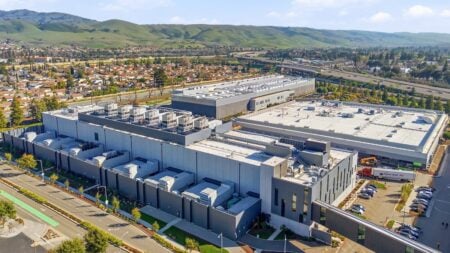

A massive Georgia data center campus is facing mounting backlash after residents learned it consumed nearly 30 million gallons of water through unaccounted-for hookups while nearby homeowners dealt with low water pressure and conservation warnings.
The controversy centers on Quality Technology Services’ sprawling Fayetteville development, located about 20 miles south of Atlanta. According to county officials, two industrial-scale water connections were discovered feeding the site last year after residents in the nearby Annelise Park subdivision complained about weak water pressure.
One connection had reportedly been installed without the utility’s knowledge. Another was not properly linked to the company’s billing account, meaning millions of gallons went uncharged for months.
County officials later billed QTS nearly $150,000 for the missing water usage, though no fines or penalties were issued.
That detail has become a big talking point in local online forums, where many Georgia residents argue the situation highlights how corporations are treated differently than ordinary people.
“It’s almost as if you can’t trust companies,” one commenter wrote over on a thread discussing a report on the issue in the Georgia subreddit.
Others questioned why the company avoided penalties despite allegedly bypassing normal permitting procedures.
“There is absolutely no reason for them to behave like responsible citizens,” another commenter wrote. “The only cost is for the water.”
The story has reignited broader criticism surrounding the rapid expansion of data centers across Georgia, where more than 200 facilities now operate. While companies often pitch data centers as economic engines that create tax revenue and tech jobs, critics argue the environmental costs are becoming impossible to ignore.
Georgia Residents Fear Data Centers Are Draining Local Resources
Many commenters focused less on the billing mistake itself and more on what they see as the growing burden data centers place on surrounding communities.
Georgia is currently experiencing drought conditions across large portions of the state, while officials have urged residents to conserve water amid wildfire concerns. Against that backdrop, residents say seeing one facility consume tens of millions of gallons without oversight feels infuriating.
“We’re going to believe the people who stole 30 million gallons of water without telling a soul, that they ‘aren’t going to use water after construction is complete’?” one commenter wrote.
Others warned that water consumption tied to data centers extends beyond the buildings themselves. Even facilities using closed-loop cooling systems still place enormous demands on power infrastructure, which often requires additional water-intensive energy generation.
“It is not at the site, it’s the power generation,” one user noted while discussing new gas turbine installations connected to data center growth.
Several residents also questioned whether local governments are becoming too dependent on large tech companies to enforce meaningful accountability.

“They’re our largest customer, and we have to be partners,” Fayette County water director Vanessa Tigert said when defending the decision not to fine QTS.
That explanation only fueled further skepticism online, where critics accused local officials of prioritizing corporate relationships over residents dealing with strained infrastructure and environmental concerns.
For many locals, the incident has become symbolic of a larger fear: that communities will bear the long-term environmental costs of the AI and data center boom while corporations continue operating with minimal consequences.