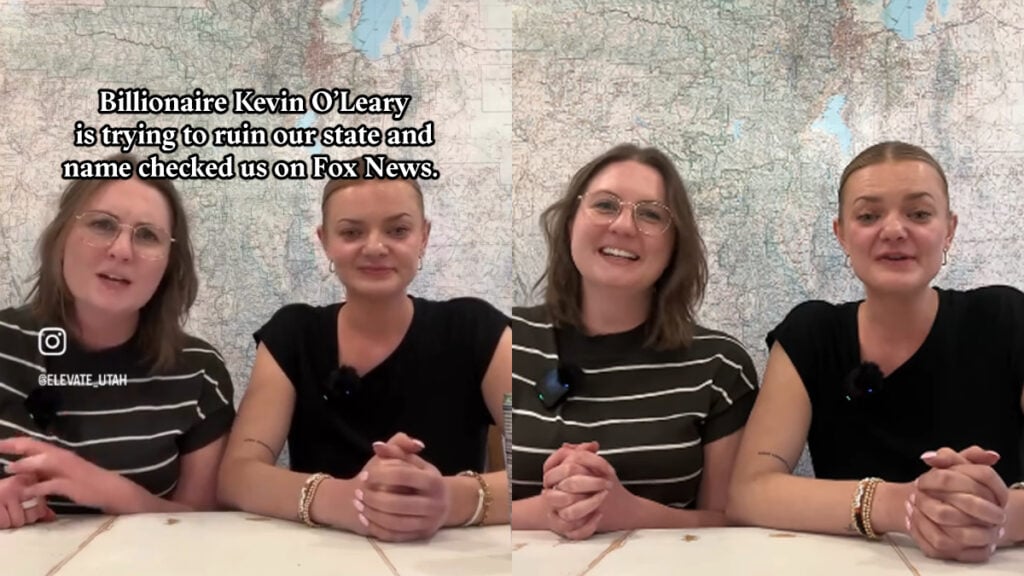
A recent exchange involving billionaire investor Kevin O’Leary and two Utah activists has sparked online debate after O’Leary allegedly accused them of being “Chinese agents” during a televised interview discussing the proposed Stratos data center project in Utah. The activists, who are connected to Elevate Utah PAC, quickly pushed back against the claim, calling it baseless and misleading. The incident has fueled wider discussion about data center development, political rhetoric, and influence in major infrastructure projects.
The video of the activists responding first spread on Instagram, where it gained hundreds of thousands of likes and thousands of comments. It also circulated widely on Reddit, where posts featuring the clip received several thousand upvotes across multiple subreddits, with users debating both the accusations and the broader Stratos project.
During the Fox News interview, Kevin O’Leary questioned who was funding opposition to the Stratos data center project, suggesting that resistance to large-scale U.S. infrastructure development could be influenced by foreign interests. He implied that China would benefit if American data center expansion slowed, and suggested the activists opposing the project were acting on behalf of outside influence. The comments quickly drew attention online after being clipped and reshared.
The two activists responded directly in the viral video, rejecting the accusations and criticizing O’Leary’s remarks. They said they were opposing the project because of concerns about its environmental and infrastructure impact in Utah, not because of any foreign involvement. They also pushed back on being labeled foreign agents without evidence, arguing that public opposition to major development projects should not be framed as outside interference.
They further criticized O’Leary’s involvement in the discussion, questioning his authority on local issues and pointing out his status as a Canadian investor commenting on U.S. infrastructure policy. The exchange became widely shared, with many viewers highlighting the tone and claims made during the interview.
Utah Internet Users React With Outrage
Reactions online were largely critical of O’Leary’s remarks, with many users siding with the Utah activists and describing the accusation as unfounded. Some commenters also questioned why foreign influence was being introduced into a domestic infrastructure debate, while others suggested the comments reflected a broader trend of politicizing development projects by linking them to national security concerns.
“These billionaires are ruining democracy. Our foreign policy and wars we engage in are fully steered by billionaires, and it’s killing people all over the world while they get to sit on yachts eating grapes,” one user wrote.
Another commenter questioned claims linking data center development in Utah to electrical grid improvements, arguing that facilities like Stratos actually increase demand on existing infrastructure due to their high energy consumption. They added that large-scale data centers may place additional strain on local power systems rather than contribute to grid expansion, raising concerns about sustainability and resource use.
The Stratos project in Utah and the surrounding debate continue to draw attention as discussions over AI infrastructure, energy demand, and local impact intensify.