
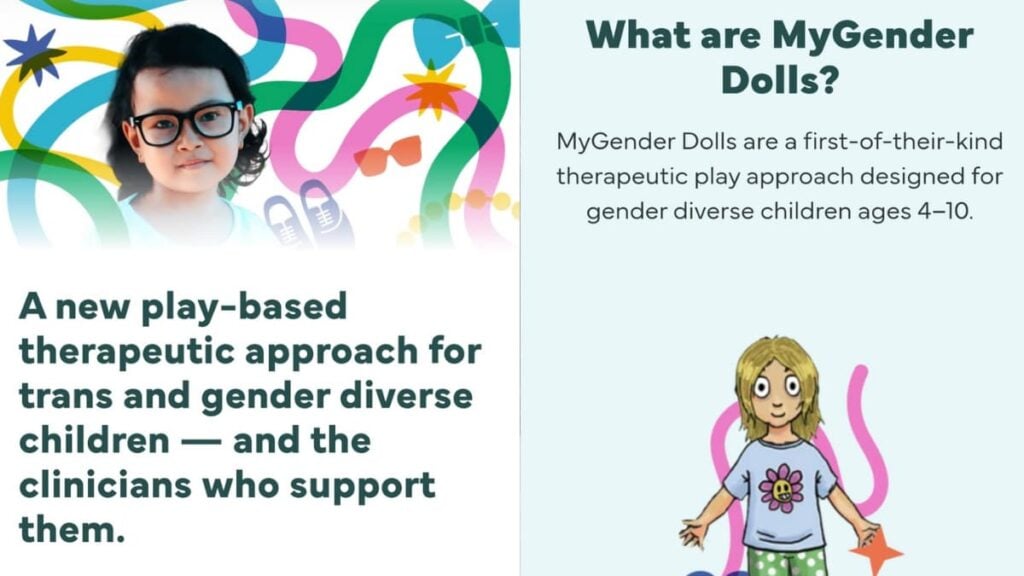
Outrage erupted online after the University of Minnesota was alleged to have launched a doll project aimed at “trans children.”
The project, called “MyGender Dolls,” is described on its official website as a line of “therapeutic” dolls designed for “gender-diverse children ages 4–10.” The website also states that the dolls are intended for transgender children, a description that has sparked significant backlash online.
The project’s description also reignited a broader debate about referring to children as transgender. Critics argue that children are still developing emotionally, psychologically, and socially, and may not yet have a stable or fully formed sense of identity. Some believe it is more appropriate to support children as they explore their feelings without applying lasting labels or encouraging gender-related medical interventions at a young age.
Others also raise concerns about parental rights, school policies, and the possibility of social influence, arguing that decisions with long-term consequences should generally be delayed until a person is older. Supporters of transgender youth, however, argue that recognizing and affirming a child’s gender identity can improve mental health and well-being. As a result, the topic remains the subject of ongoing public, medical, and political debate.
The university has reportedly removed the webpage that previously described the doll project. Despite that, the project still appears to be moving forward, with its official website continuing to invite visitors to “Join the waitlist.” It remains unclear whether the project will proceed as planned or whether any changes will be made following the online backlash.
Viewers Attack University of Minnesota Over Dolls Project
The project sparked reactions online. Many viewers expressed opposition to the University of Minnesota’s alleged doll project, arguing that children should not be described as transgender. “Find the sick porn-addicted individuals and get them out of our school system. Grooming children is a crime,” one person wrote. Another said, “Why won’t Congress just outlaw this already? No trans mutilation on minors. No hormone blockers or procedures of any type before age 21. Reaffirm biology, nature, science, religion, and common sense with one simple measure. It’s as politically as favorable as the SAVE Act too.”

Other viewers also called for action to be taken against the project and criticized its stated purpose. “We need red states to revoke the license of any ‘mental health professional’ who reinforces a patient’s delusions instead of helping cure them. It’s the only way to protect the vulnerable from the damage caused by the ‘professionals’ who are supposed to help them,” one person wrote. Another commented, “I’m glad that insanity wasn’t taught when I was a kid. Where are the parents?”
The news sparked a conversation about how society should approach gender identity in children and whether projects like this are appropriate for young audiences. It also led to broader discussions about transgender youth, parental involvement, and the ongoing public debate surrounding LGBTQ+ issues.