A new Florida law expanding the criteria used to determine criminal gang membership is drawing attention online, with critics warning that social media activity could now play a larger role in how suspected gang members are identified. Some critics couldn’t help but compare the law’s authors to dictatorships given the nature of the provision.
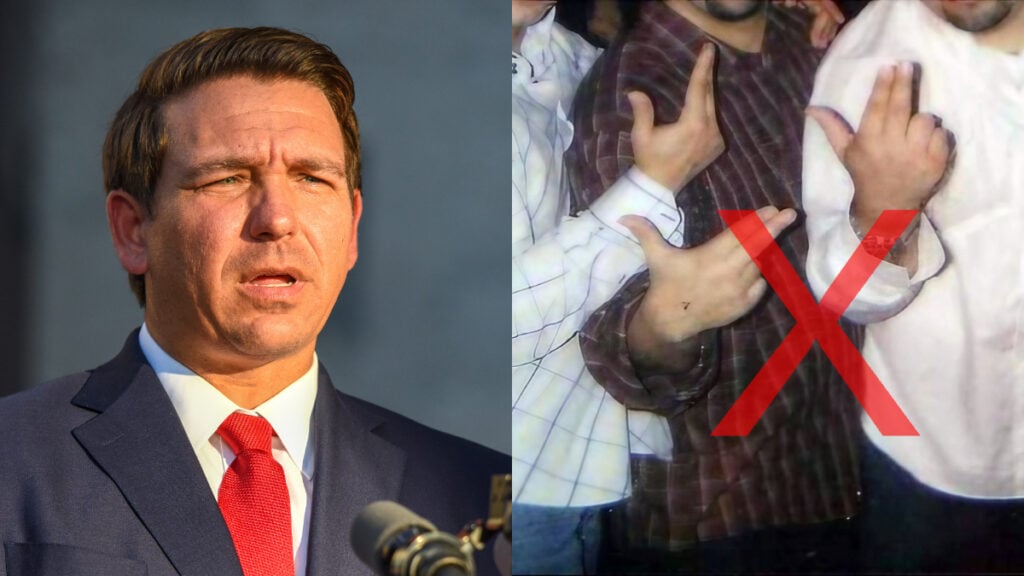
CS/HB 429, sponsored by Republican lawmakers including Reps. James Baker and David Chamberlin, revises Florida’s definition of a “criminal gang member” and creates a statutory definition of “gang-related language.” The law was approved by Gov. Ron DeSantis on June 16 and takes effect Oct. 1, 2026.
Under the new law, a person can meet the definition of a criminal gang member by satisfying two or more specified criteria. Those criteria include admitting gang membership online, being identified as a gang member by a criminal gang, being identified by a parent, guardian, or spouse, being repeatedly observed with known gang members, authoring communications indicating gang affiliation or gang activity, or using gang-related language online in furtherance of criminal gang-related activity.
The law also defines “gang-related language” as verbal or written statements that signal gang affiliation, support gang activity, or use recognized codes, symbols, or terminology associated with criminal organizations. The definition specifically includes digital and electronic statements made on social media and other online platforms.
The measure passed the Florida House by a 100-7 vote and the Senate by a 29-9 vote. State officials have described the legislation as an effort to modernize Florida’s gang statutes by recognizing online admissions and social-media activity as contemporary indicators of gang affiliation.
The Criticism Was Swift
The wording sparked a wave of reactions on social media. One X commenter wrote, “Republicans really want America to be the new north korea.” Another user pushed back against the criticism, writing, “Or just don’t be a dumb[expletive] and incriminate yourself online lol.”
Others also questioned how the law could work in practice. “But what if someone hacked your profile how are they gonna verify That was really you who claimed to be one,” one commenter asked. Another user wrote, “Some of those MCs don’t take too kindly to people saying they are members and most certainly aren’t. Arresting posers isn’t going to make anyone safer.”
There were also jokes about the law potentially affecting people who use gang terminology online without actually belonging to a gang. “Mfs don’t even have to get jumped in anymore or be affiliated by association. Just bang heavy on social media and you got it. What a time,” one commenter wrote.
Importantly, the law does not mean that a single social media post can automatically get someone labeled a criminal gang member, as a person generally needs to meet at least two of the specified criteria. Even so, with the new rules taking effect on Oct. 1, 2026, questions remain over how broadly the expanded definitions will be applied in practice — particularly when online activity becomes part of the evidence used to identify suspected gang members.