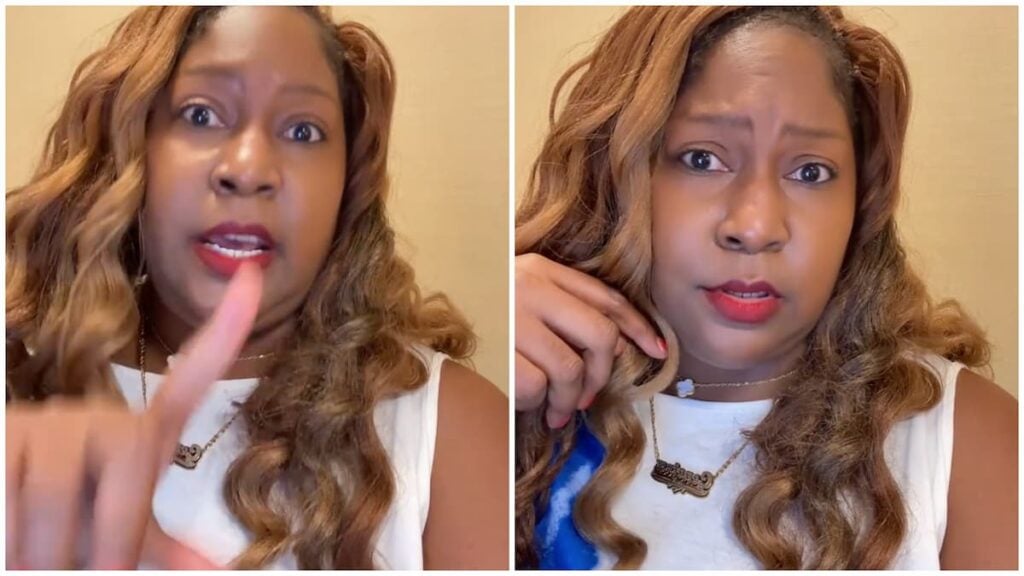
A black California woman is speaking out after claiming she and her friends were racially profiled while shopping at a Marshalls in La Jolla, San Diego. What started as a routine shopping trip allegedly took an uncomfortable turn when the women overheard employees speaking in Spanish and, according to the TikToker, discussing their group as though they were suspected of stealing — apparently unaware that the women could understand what was being said.
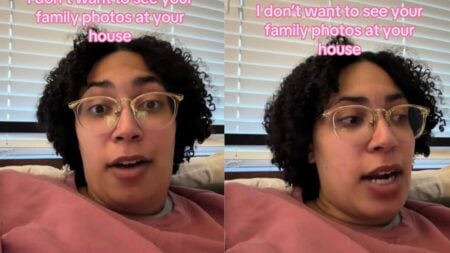
The video comes from TikTok creator @thevirtuouseducator — aka Netra Nicole — who shared a six-minute storytime detailing what she claims happened during a recent shopping trip to the La Jolla store with a group of friends.
After explaining that this isn’t the type of content she usually posts, Netra begins by describing what was supposed to be a birthday trip with friends in San Diego. However, she claims their experience while shopping at the La Jolla Marshalls quickly became deeply uncomfortable. “Our experience was so disturbing. We were completely insulted, and the behavior from those employees was completely unacceptable,” she says. “We were the only black women in the store. Four of us. And the employees were speaking Spanish amongst themselves, while discussing us and suggesting that we were stealing.”
The employees apparently didn’t realize, however, that some of the women could understand what they were saying. “What they didn’t expect from us was that some of us understand Spanish. That’s where they messed up,” Netra explains. She insists that the group was simply shopping and says the four women ultimately spent close to $1,000 at the store. “Assumptions are apparently being made basically solely on how we look, because we’re beautiful black women,” she adds.
Netra also points out that she and her friends are all professionals who collectively earn more than $500,000 a year, although she stresses that their careers and income shouldn’t determine whether they’re treated with respect while shopping.
Netra says she was particularly upset that the alleged comments came from other women of color, arguing that she and her friends had been “reduced […] to a stereotype the moment we walked in the store.” She also pushed back against the apparent assumption that the group couldn’t understand the conversation. “Speaking Spanish did not make the employees’ comments private or acceptable, because they apparently assumed that we just couldn’t understand them,” she says. “We heard what was being said and we understood it.”
After leaving the store, Netra says one of her friends called Marshalls and spoke with a manager named Aracelia about what had happened. She credits the manager for listening to their concerns and says she was “very apologetic,” something the group appreciated. However, Netra maintains that the response couldn’t undo how they felt they had been treated. “What we would’ve appreciated even more is if it would’ve never happened in the first place,” she explains. “An apology after customers have been humiliated and made to feel racially profiled cannot undo the experience we had.”
Netra says the experience ultimately left the group feeling like they were being treated as suspects rather than paying customers. “Instead of being seen as customers, we were made to feel watched, judged, and suspected,” she explains, adding that she found it particularly upsetting that the alleged behavior came from other women of color. “That just has to stop. This is 2026. Why are we still doing it? We will never come back.”
Netra says the experience ultimately left the group feeling like they were being treated as suspects rather than paying customers. “Instead of being seen as customers, we were made to feel watched, judged, and suspected,” she explains. “That just has to stop. This is 2026. Why are we still doing it? We will never come back.”
She finishes by calling on Marshalls management to provide employees with “serious training” and “serious professional development” surrounding bias. “Every person deserves respect,” Netra concludes, before driving home her message: “Being black while shopping is not suspicious behavior.” She says the group walked into Marshalls ready to spend their money but ultimately left feeling “stereotyped because we were black.”
Viewers React to Alleged Marshalls Profiling Incident
The storytime quickly drew support from viewers, many of whom sympathized with Netra and her friends over their alleged experience. “Sad to hear about your experience. No one should be made to feel this way for any reason,” one person wrote. Another San Diego resident added, “As a Mexican woman that lives in San Diego, I apologize for the ignorance. Call corporate on them… I would.”
Several commenters similarly urged Netra to take the matter beyond the store manager. “I would still report them to corporate and would not have purchased those items,” one viewer wrote, while another insisted, “You need to report them all to corporate and file a complaint!” The latter, who also identified themselves as a San Diego resident, said they planned to visit the same Marshalls to see whether they experienced anything similar.
Others directed their frustration toward the La Jolla location itself. “Marshalls in La Jolla [do] better,” one commenter wrote. Another was considerably more fired up, admitting that hearing Netra’s story had them “HOT around the collar.”
For Netra, however, the experience appears to have left a lasting impression. While her account of what happened inside the La Jolla Marshalls has not been independently verified, the reaction to her story shows why allegations of racial profiling continue to strike such a nerve. Regardless of someone’s race, career, or how much money they intend to spend, shoppers should be able to walk into a store without feeling as though they’ve already been judged before reaching the checkout.