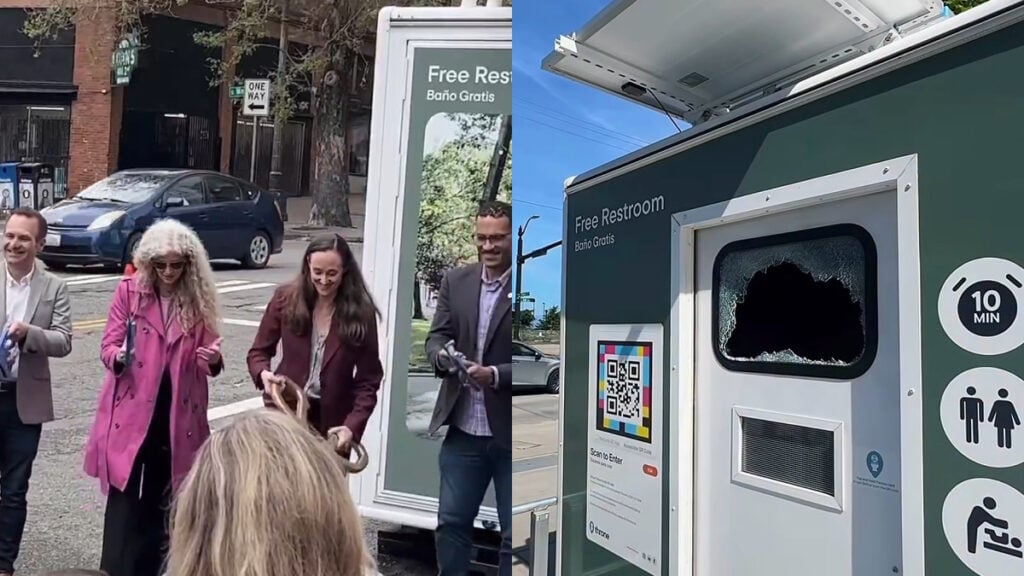
Outrage is growing in Washington after Seattle’s new public restroom pilot near Lumen Field was damaged shortly after installation, with one of the solar-powered units found with a shattered window just weeks into the program. The incident has drawn attention because the restrooms are part of a city effort to expand downtown sanitation ahead of the 2026 FIFA World Cup.
The story spread widely on social media platforms including X (formerly Twitter), where posts about the damaged restroom quickly gained thousands of views and sparked hundreds of comments. It circulated alongside broader debate about Seattle’s spending on public infrastructure and the cost of the pilot program.
Images and videos shared online show a restroom unit near Lumen Field in Washington with a broken window panel. The damaged unit was taken offline after it was reported, while other units in the area remained open. The restrooms are part of a monitored system that uses QR code access, time limits, and remote maintenance tracking.
According to MyNorthwest, the pilot program includes four solar-powered restroom units installed in Seattle’s Pioneer Square neighborhood as part of a one-year trial ahead of the 2026 FIFA World Cup. The city partnered with Throne Labs to operate the facilities, which are designed for quick maintenance response and regular monitoring. Officials said the damaged unit was repaired and back in service the same day, and the city will evaluate performance, durability, and public feedback before deciding on future expansion.
Users React To Restroom Damage in Washington
The reaction online was largely critical and politically charged, with many users focusing on the project’s cost and questioning how public funds were spent in Washington. Some commenters mocked the price tag and compared the units to cheaper portable toilets, while others described the situation as poor planning or wasteful spending. One user wrote, “Seattle spent $456,000 on 4 toilets for the World Cup. It didn’t even last 2 weeks.”
Others used the incident to criticize Seattle leadership more broadly, arguing that city priorities are misaligned or poorly managed. Some called for greater transparency and oversight in public spending, especially for high-cost pilot programs.

There were also sarcastic and humorous reactions, with users joking about “luxury toilets,” ribbon-cutting ceremonies, and how quickly the facilities in Washington were damaged after installation. Several commenters contrasted the new restrooms with ongoing concerns about street-level sanitation, saying the investment felt disconnected from visible conditions in the city.
Overall, the incident has turned the restroom pilot into a flashpoint for debate over public spending in Washington, with attention now focused on whether the project will prove durable enough to justify its cost and long-term rollout plans.